Wednesday, 28 October 2026 · 4 videos and 17 web articles (incl. Japan and China sources) from 27-28 Oct, merged into 5 stories
TL;DR
1Highlight: Anthropic filed to list on the Nasdaq, and its filing says Claude wrote over 90% of its code changes in September.
2How companies use AI: HIS saves 100 hours a month on travel quotes, plus Kyoto Prefecture, BMW's self-driving factory cars and a startup that paused AI for a new engineer.
3AI makes hacking cheaper but fixes slow, a written rulebook for your AI, and helpers that act before you ask.
Highlight of the day
AI business
90%+
of Anthropic's September code changes were written by Claude
Merged from 8 sources
★ Highlight of the day
Anthropic files to go public, and Claude writes most of its code
Anthropic, the company behind Claude, has filed papers to sell shares on the Nasdaq stock market under the ticker "ANT". The filing is a Prospectus A long official document a company files before an IPO, explaining its business, money and risks. In the US it is called an S-1. of about 335 pages, and it is the first close look at the company's real numbers. Reports say the IPO An initial public offering: the first time a private company sells its shares to anyone on a stock market. could happen as early as mid-November.
What we learned
In September, Claude wrote more than 90% of the code changes made at Anthropic. Engineers now mostly give Claude instructions and check its work, like supervisors.
Sales in the first half of 2026 were about 14 times higher than a year earlier. Existing customers spent about 9 times more than the year before. That is a Net revenue retention How much existing customers spend this year compared with last year. Over 100% means they are spending more. of about 900%.
Staff grew about 2.7 times in a year, to about 5,300 people. The filing again promises never to show ads inside Claude chats.
Anthropic is a Public benefit corporation A type of US company that must weigh the good of the public, not only profit for shareholders., so it must weigh the public good, not just profit. A separate trust picks most board members, and the seven co-founders keep 50.1% of the votes.
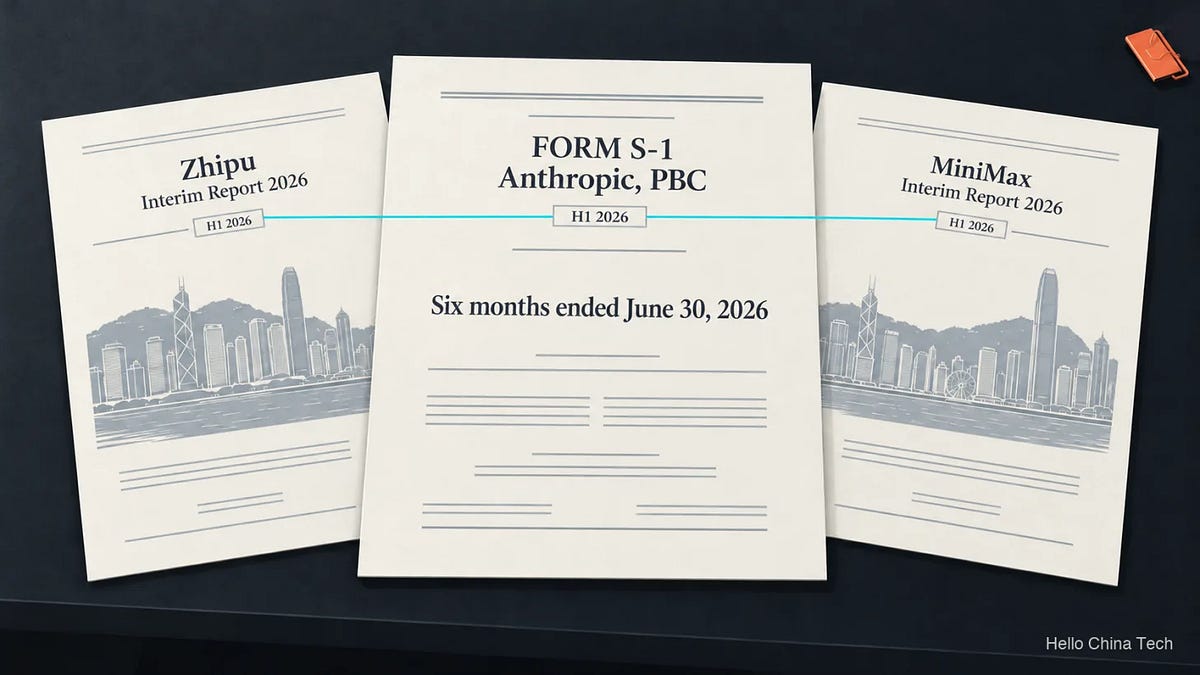
More than 90 pages list risks, from AI that could harm people to cheap open-weight models from China. Hello China Tech compared it with Chinese labs Zhipu and MiniMax: Anthropic's Gross margin The share of each sale left after paying the direct cost of making it. For AI firms that cost is mostly computer power. is near 85%, far above theirs.
Why it matters: This is the first time the public can see inside a top AI lab's business. It shows AI companies already use their own AI to build most of their software.
Anthropic files S-1 for a Nasdaq IPO under ANT (Japanese) · BRIDGERead ↗
Anthropic's prospectus: AI as existential risk, 90% of code by Claude (Japanese) · ITmediaRead ↗
How China risk factors loom over Anthropic's IPO filing · South China Morning PostRead ↗
Anthropic's S-1 set against Zhipu and MiniMax · Hello China TechRead ↗
Anthropic publishes its 335-page prospectus (Chinese) · QbitAIRead ↗
Anthropic reaffirms no ads in Claude in its IPO filing (Chinese) · IT HomeRead ↗
AINews: Anthropic files its S-1 · Latent SpaceRead ↗
4 Questions for AI This Week · The AI Daily BriefWatch ↗
More stories today
How companies use AI
100 hours
a month saved on HIS business-trip quotes
Merged from 4 sources
How companies use AI
HIS, Kyoto, BMW and a Japanese startup share measured AI results
Four organisations shared before-and-after numbers this week. Three are in Japan and one is a car maker in Europe. Each one started small, checked the results, and kept a person in charge of the final call.
Key learnings
HIS (travel company, Japan): quoting a business trip from a customer email took about 20 minutes. Since April 2026, AI agent An AI program that takes actions for you, like writing code, paying a bill or changing a menu, not just answering questions. plus Robotic process automation Software 'robots' that click through computer screens and forms the way a person would, following fixed steps. from UiPath read the email, build the quote and enter it. By July the team saved 100 hours a month, and 400 of 1,000 quote emails went out with no human edits (HIS, reported by ITmedia). Lesson: automate the simplest, most common case first.
Kyoto Prefecture (local government, Japan, 7,000+ staff): staff wasted time flipping through rule manuals. The office kept Microsoft Copilot Chat for writing and added a RAG Retrieval-augmented generation: the AI first looks up your own documents, then answers using what it found. chatbot from User Local that answers from its own manuals. In a staff survey, 84% of ChatAI users said they now ask the rules team fewer questions, and 95% were happy with Copilot Chat (Kyoto Prefecture's own survey). Lesson: use two tools if each does one job well.
BMW with Embotech (car factories, Germany and UK): new cars used to need a driver to move them off the line. Embotech's Level 4 autonomy A vehicle that drives itself with no human in a set area, like a factory or a fixed route. system, with sensors on the factory walls, now makes about 3,500 car moves a day at four plants with 99.5% uptime. It has moved 1 million cars since a 2022 pilot (Embotech and BMW). Lesson: put the smarts in the building, not in every vehicle.
Ierabu GROUP (property software, Japan): a new engineer's first big feature drew 830 review comments because he trusted AI code blindly. The firm banned AI for him for three months and taught him to plan first. He went from 7 code reviews of others in 18 months to over 100 a month (the company, via ITmedia). Lesson: teach judgement before handing over AI.
Why it matters: These results were measured, not just promised. The common thread is to pick one narrow task, time it before and after, and keep a person checking the AI.
HIS cuts 100 hours a month with AI agents for business-trip quotes (Japanese) · ITmedia EnterpriseRead ↗
Why Kyoto Prefecture decided not to rely only on Copilot (Japanese) · ITmedia Keyman's NetRead ↗
Embotech and BMW move 1M vehicles with automated driving technology · The Robot ReportRead ↗
A company that banned AI for new hires, one year later (Japanese) · ITmedia NEWSRead ↗
AI and security
2.7x
more clicks on AI-tailored scam emails than normal ones
Merged from 3 sources
AI and security
AI makes hacking cheaper, but fixing the holes is still slow
AI tools can now find software weaknesses and write convincing scam emails at huge scale. This week brought a big study on AI-written scam emails and a real test break-in at Anthropic. Experts say the hard part is no longer finding problems, it is fixing them safely.
Key learnings
German researchers sent AI-written Spear phishing A scam email written for one specific person, using facts about them, to trick them into clicking or sharing secrets. emails to 3,310 university staff. These are scam emails tailored to one person using facts found online. 10% clicked, versus 3.9% for a normal scam email, about 2.7 times more. The university's spam filter flagged just 1 of 3,949 emails (USENIX Security study, via ITmedia).
Security startup Cathedral used AI agent An AI program that takes actions for you, like writing code, paying a bill or changing a menu, not just answering questions. to get into some of Anthropic's sales, HR and IT systems in under 12 hours, through a hole in outside software. It was an approved test. Anthropic says customer chats and model files were not touched (Washington Post, via IT Home).
IBM says Anthropic's Project Glasswing found about 2,300 Vulnerability A weakness in software that an attacker could use to break in or cause harm. in 400 Open-source Software, or an AI model, whose code or files are published so anyone can use and change them. projects, one hidden for 27 years. Finding is now easy. Writing a safe Patch A small software update that fixes a bug or closes a security hole., testing it and fixing older versions is the slow part. IBM's answer is shared fix teams.
Simple steps still help: turn on Passkey A way to sign in with your phone or fingerprint instead of a password, which scam websites can't steal. instead of passwords, keep each API key A secret code that lets a program use a paid online service. Anyone who steals it can run up your bill. in a password manager, and set spending limits on AI accounts. On The AI Daily Brief, Anthropic's deputy security chief was quoted asking firms to fix the basics and "hold on for around 18 months".
Why it matters: Small firms are now easier targets, because AI makes tailored scams cheap. Training staff and turning on basic protections matters more than ever.
AI-generated personalised phishing triples click rates in a 7,000-person study (Japanese) · ITmedia NEWSRead ↗
Anthropic confirms some internal systems were accessed in a security test (Chinese) · IT HomeRead ↗
Open Source Security in the Age of AI · IBM TechnologyWatch ↗
AI at work
3 steps
study, ask, save: how Jeff Su builds his AI rulebook
Merged from 3 sources
AI at work
Give your AI a written rulebook so it works the same way
Jeff Su keeps one file of "Notion rules" that any AI chatbot reads before it builds pages for him. Without it, two fresh chats made messy, different pages. With it, they matched. Trainers in Japan teach the same idea: write down how a job is done before you hand it to AI.
Key learnings
Jeff Su's method has three steps. The AI studies a database's fields and templates, asks him questions, then saves the answers as a rulebook file. Claude, ChatGPT or Gemini can all reuse it.
He prefers one main AI that uses Notion as one tool among many, rather than working only inside Notion AI. Note that his video also promotes his own course.
Itochu Interactive in Japan now trains companies to build Claude agents around their own jobs, such as proposals and reports. Students turn their steps and rules into reusable Skill A saved, reusable set of instructions (and sometimes code) that an AI agent loads when a task needs it. the whole team can share.
ITmedia warns that dashboard numbers like "85% usage" or "hours saved" do not convince bosses. Measure what changed in the business, such as overtime or sales.
Why it matters: An AI is only as consistent as the instructions it gets. A shared rulebook turns one person's tricks into a team habit.
I knew AI + Notion would be good, but this... wow. · Jeff SuWatch ↗
Itochu Interactive launches Claude agent-building training (Japanese) · ITmedia Keyman's NetRead ↗
AI saves X hours a month, but what really changed? (Japanese) · ITmedia BusinessRead ↗
Agents and new tools
2 million
Lingguang downloads in its first six days
Merged from 3 sources
Agents and new tools
Personal AI helpers start doing chores before you ask
AI helpers are moving from answering questions to keeping watch for you. Ant Group's Lingguang 2.0 in China tracks flight prices and spots forgotten subscriptions. Grok Bot added password and Apple app tools. Google DeepMind showed Genie 4, which builds practice worlds for robots.
Key learnings
Lingguang 2.0 is a Proactive agent An AI helper that watches for things and acts or alerts you on its own, instead of waiting for a question.: with your permission, it keeps working after you close the chat. It can flag a cheaper flight, find unused subscriptions in Alipay bills, or pull to-dos from a school group chat. A separate system holds your login keys, so the agent never sees them.
Grok Bot's Oct 27 update video adds Pages, a locked Vault for secrets, 1Password sign-in, links to Apple apps and new video tools. This is the company's own product update, not an outside review.
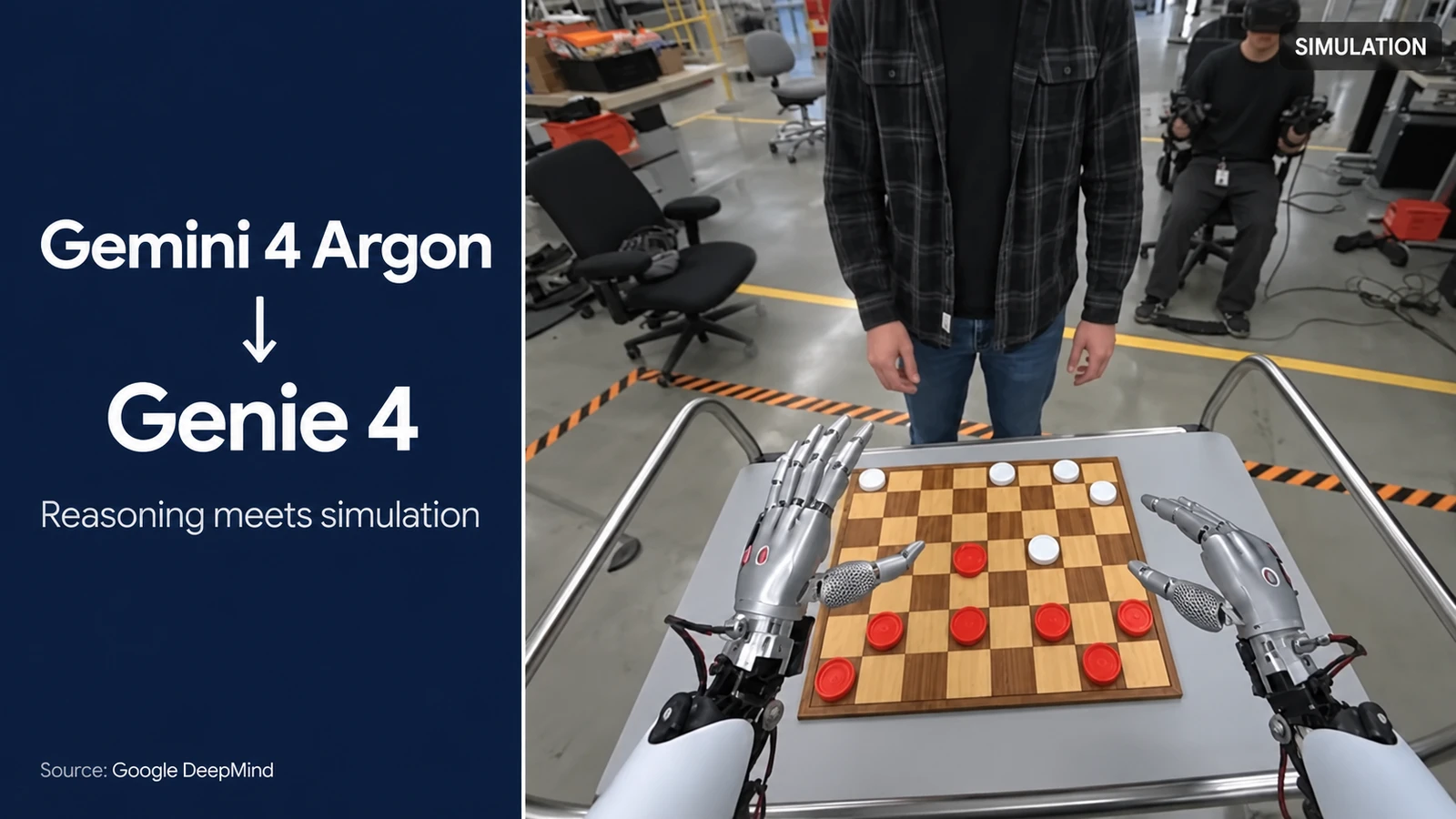
Google DeepMind's Genie 4 is a World model An AI that builds an interactive, changing scene, so robots or agents can practise inside it., an AI that builds an interactive scene you can change as it runs. Paired with Gemini, it showed a robot playing checkers, only in Simulation Testing a robot or system in a virtual world on a computer before trying it in real life.. It is a research preview for testers.
Humanoids Daily notes nothing was shown on a real robot yet. Lingguang reached 2 million downloads in its first six days, back in November 2025.
Why it matters: Helpers that act on their own need strong limits on what they can touch. Look for clear permission settings before you connect your bank, email or phone.
 AI business