Sunday, 25 October 2026 · 3 videos and 16 web articles from 23–25 Oct, merged into 5 stories
TL;DR
1Highlight: AI bubble fears are rising, yet Amazon says its AI computing capacity for 2027 is basically sold out and China's AI usage quadrupled in six months.
2Companies in China report measured results: fewer warehouse robots doing more work, AI help in 77,000+ clinics, and agents writing 95% of one team's new code.
3Agents that save what works as reusable skills, a reality check on robots, and Kimi K3.1 Pro near the top of the rankings.
Highlight of the day
AI boom or bubble?
4x
growth in China's daily AI usage in six months (CAICT)
Merged from 4 sources
★ Highlight of the day
Bubble talk is getting louder, but the people selling AI computing power say they can't keep up with demand
Investors are openly asking whether AI is a bubble. One of the most-watched AI shows walked through the warning signs: a few big customers make up much of AI spending, and some smaller GPU A powerful computer chip, originally for graphics, that is now the main hardware used to train and run AI.-rental companies are under financial stress. At the same time, Amazon's CEO says its cloud's AI computing capacity for 2027 is basically sold out, and a Chinese government-backed research institute reports that daily AI usage in China quadrupled in six months while prices went up, not down.
What we learned
Two different risks get mixed up: a stock-market drop (painful but survivable) and a debt crisis, where borrowed money spreads losses to lenders and insurers.
Spending is very concentrated: per data cited on the show, the top 1% of businesses account for about 80% of AI spending.
Amazon's Andy Jassy says AWS computing capacity is basically sold out for 2027 and much of 2028 is already booked; some of Amazon's chips reportedly sat unused because there wasn't enough electricity to run them.
China's CAICT The China Academy of Information and Communications Technology, a government-backed research institute that publishes tech industry reports. institute found daily Token A small chunk of text, roughly part of a word, that AI models read and write. AI usage and pricing are counted in tokens. use (a measure of how much AI people use) reached about 500 trillion in June, roughly 4 times December's level, and domestic token prices nearly doubled.
Why it matters: For small businesses, the practical risk isn't a crash but rising prices and capacity limits. It's worth knowing which AI tools you depend on and having a backup option.
of new code in one Alibaba Cloud team written by AI agents
Merged from 3 sources
How companies use AI
Warehouses, clinics and coding teams in China report measured results from AI
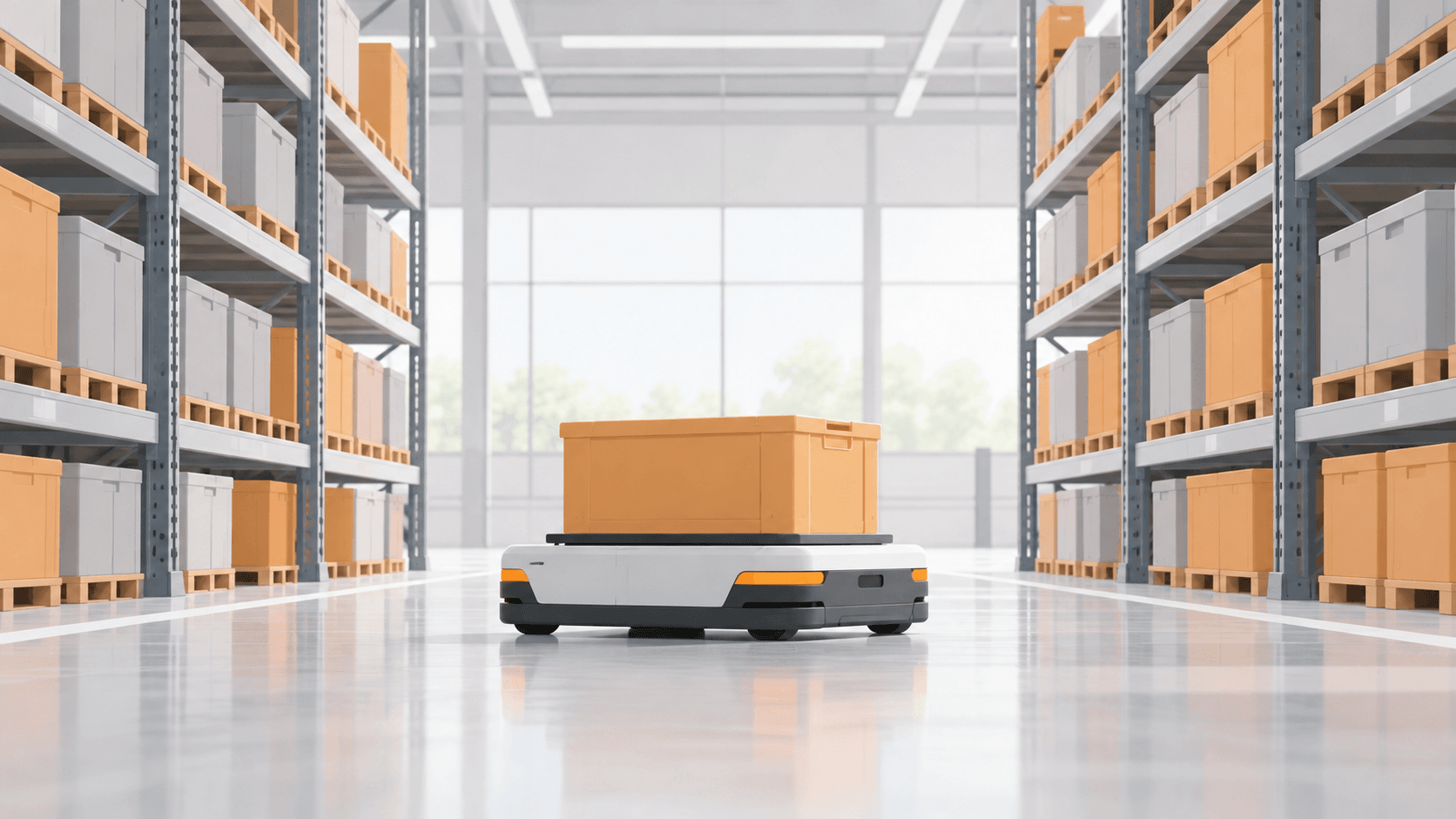
Three Chinese companies shared numbers this week. A warehouse robot maker rearranged how its robots split work and got more done with fewer machines, a medical AI is now used by more than 77,000 grassroots clinics, and Alibaba Cloud says AI agent An AI program that takes actions for you, like writing code, paying a bill or changing a menu, not just answering questions. now write almost all new code in one of its engineering teams. All figures are reported by the companies themselves.
Key learnings
Hikrobot: by letting one robot type handle everything inside a storage aisle, routes got over 50% shorter, and with 30% fewer of the other robot type the system completed 23.5% more tasks. Its picking station handles up to 900 items an hour at over 99.99% accuracy.
iFLYTEK Healthcare: its clinical assistant serves more than 77,000 grassroots medical institutions and has given over 1.2 billion AI-assisted suggestions; 85% of the medical records it drafts are now rated reasonable.
Alibaba Cloud: 95% of new code in its basic software team is generated by agents, and it says its agent-focused operating system cuts Token A small chunk of text, roughly part of a word, that AI models read and write. AI usage and pricing are counted in tokens. use by more than 30%.
Why it matters: The pattern is the same in all three: AI pays off when the workflow is redesigned around it, not when it's bolted on. That's a useful lens for any team's next AI project.
Hikrobot launches single-unit smart mobile robots that deploy in 30 minutes · PandailyRead ↗
iFLYTEK Healthcare upgrades Spark Medical Model to V3.7 · PandailyRead ↗
OpenAnolis builds Anolis OS 27 agent-native as Alibaba Cloud says agents write 95% of new code · PandailyRead ↗
Agents that teach themselves
94.5 → 35.9 min
robot task time after reusing saved skills
Merged from 2 sources
Agents that teach themselves
AI agents are getting better by writing down what works, without retraining the model
Two research projects point the same way. Google Research and Northwestern's Harness² lets an agent improve its own toolkit of Skill A saved, reusable set of instructions (and sometimes code) that an AI agent loads when a task needs it., checks and helper agents, and Fudan University's RoboSkill lets robots save a method that worked as a reusable skill made of written notes plus the code they ran. Both get big gains without retraining the underlying model.
Key learnings
Harness² reported gains of 35 to 50 points on complex tasks, and a smaller model with an improved toolkit beat a bigger model using its default setup.
The catch: each task took 4 to 20 practice runs, and in one run the agent's self-written checker reported a pass three times while the task was failing.
RoboSkill: reusing saved skills cut one robot agent's average time from 94.5 minutes to 35.9, and saving code alongside the written notes mattered most.
Shared lesson: keep the main instructions short and store know-how as small skills the agent loads when needed.
Why it matters: This is the same idea behind keeping a shared skills library for your bots: written-down, reusable know-how makes AI more reliable than ever-longer prompts.
Harness² Explained: Self-Improving Agents Without Training · Prompt EngineeringWatch ↗
Fudan's RoboSkill lets robot agents save what they learn as reusable text-and-code skills · PandailyRead ↗
Robots: reality check
0 of 11
plug-insertion tasks passed in SenseTime's real-robot tests
Merged from 6 sources
Robots: reality check
Robots are getting smarter in the lab, but most of them aren't doing real work yet
SenseTime tested whether today's best AI can control robots and found it often can, given enough time, but far too slowly and expensively for real use. A Chinese government-backed report says many Humanoid robot A robot built roughly in the shape of a person, with arms, a torso and often legs. shipped this year are switched on fewer than 10 days a month. Still, there are real factory deployments: five wheeled humanoids now help assemble robot parts at a Schaeffler factory in Taicang, and Alibaba's Amap trained a humanoid using only videos of people.
Key learnings
SenseTime's report: GPT-6-Astra put a pen into a pen holder, but took about 263 minutes on average. In real-robot tests it passed 17 of 18 simple pick-and-place tasks but 0 of 11 plug-insertion tasks.
CAICT The China Academy of Information and Communications Technology, a government-backed research institute that publishes tech industry reports.: entertainment, shows, education and data collection make up over 60% of humanoid uses; only about 18% are in factories and warehouses.
Amap's Lambda-0 learned from people wearing ordinary recording devices (about 29 seconds per demonstration versus about 100 with a real robot) and reached 62.5% success on a Unitree G1 robot.
AGIBOT launched Genie Studio 2.0, a platform it says can take a new robot job from zero to tested in as little as 7 days, and set a Guinness record with 110 humanoids dancing at once.
Why it matters: When a robot demo looks impressive, ask how long the task took and how often it runs in a real workplace. Those two numbers separate a demo from a deployment.
SenseTime open-sources RoboRSI and tests GPT-6 on embodied tasks (Chinese) · Physical DailyRead ↗
Embodied AI mass production: who is actually working? (Chinese) · im-robotRead ↗
Rokae humanoids assemble robot joint parts at Schaeffler Taicang factory (Chinese) · im-robotRead ↗
Amap open-sources Lambda-0, a whole-body humanoid model trained only on human data · PandailyRead ↗
AGIBOT AI WAVE: Genie Studio 2.0 (Chinese) · im-robotRead ↗
AGIBOT sets Guinness record with 110 humanoids dancing (Chinese) · 36KrRead ↗
China's AI race
#4
Kimi K3.1 Pro on Artificial Analysis' Intelligence Index
Merged from 4 sources
China's AI race
Moonshot's Kimi K3.1 Pro lands near the top of independent rankings, and Tencent adds it to its work agent
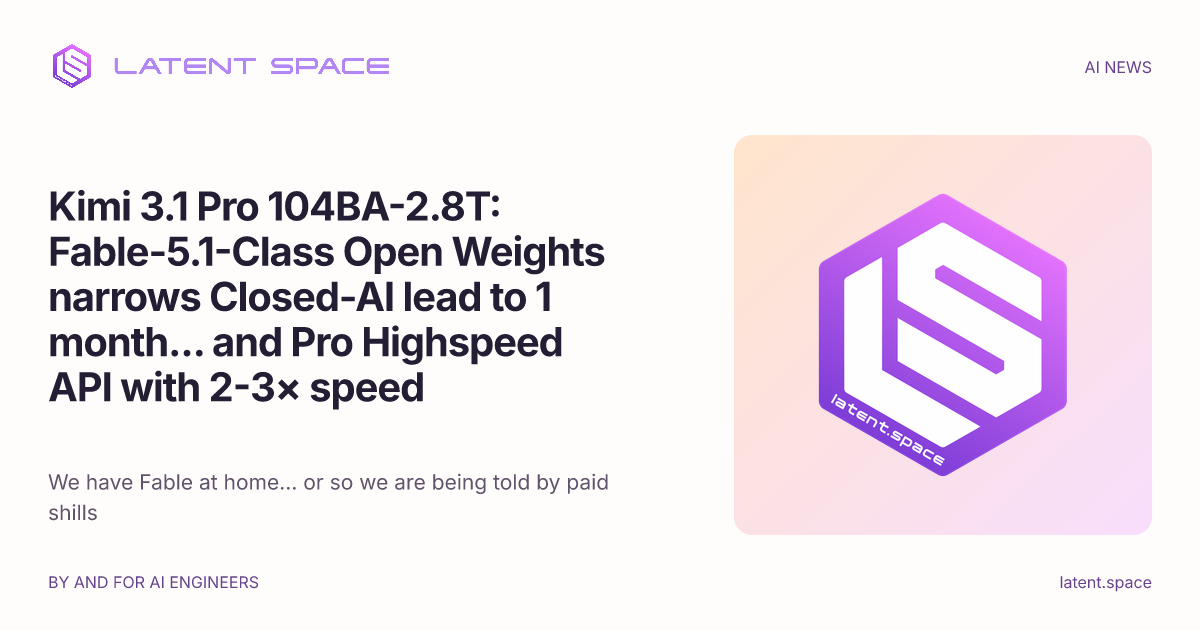
Moonshot released Kimi K3.1 Pro, a very large model that an independent tester ranked fourth overall, with downloadable weights promised for November 4. Tencent, which a CNA documentary says is trailing ByteDance in consumer AI, quickly added Kimi to its WorkBuddy work assistant. Alibaba also opened an invite-only beta that lets people build and share simple apps just by describing them.
Key learnings
Kimi K3.1 Pro scored 55 on Artificial Analysis' index, behind only three closed models, and its biggest gains were in agent tasks.
It's huge (2.8 trillion Parameters The internal numbers a model learns during training. More parameters usually means a bigger, more capable but costlier model.), so 'open' won't mean running it on a laptop; it needs serious server hardware.
CNA: ByteDance's Doubao had 382 million monthly users in June versus about 50 million for Tencent's Yuanbao.
Alibaba's Qwen Go! My Apps turns a plain-language request into a shareable No-code Building software by describing or clicking what you want, without writing programming code. app (invite-only for now).
Why it matters: Strong models are coming from more labs, so prices and options keep shifting. Pick tools that let you switch the model underneath.
 AI boom or bubble?