Thursday, 22 October 2026 · 12 videos added 19–22 Oct, merged into 5 stories
TL;DR
1Highlight: AI agents are now the main attack surface. Security teams say: verify, then trust.
2Personal agents are polished and connected to your apps, but still slow, solo and easy to get locked into.
3Running AI is getting cheaper, AI personality is the new benchmark, and Asia is putting AI to work on runways and in robot schools.
Highlight of the day
AI security & trust
84%
of ransomware attacks had AI help
Merged from 2 videos
★ Highlight of the day
Your AI agents are now the easiest way in. Security teams say: verify, then trust
Two security briefings this week reach the same conclusion. Attackers now use AI in most ransomware attacks, and they increasingly go through the AI agent An AI program that takes actions for you, like writing code, paying a bill or changing a menu, not just answering questions. and identity systems companies have set up themselves. Meanwhile new AI decision tools return confident answers that are hard to audit, and a confident wrong answer is harder to catch than an obvious error.
What we learned
A survey of 1,200 IT professionals found 84% of ransomware attacks had AI help. 44% abused a company’s own agents or identity systems.
Old risks still hurt: hacked supermarket fridges ran old firmware even though a fix already existed.
Confidence is not evidence. A model saying “97% sure” can still have been fed altered logs or poisoned data.
The fix is boring and works: give agents their own identities, log everything, use a kill switch, split big decisions into small checkable steps, and keep a human on high-risk actions.
Why it matters: Every Notion agent and AI workflow we build for clients needs access rules, audit logs and an off switch from day one. That is a clear, sellable part of an engagement.
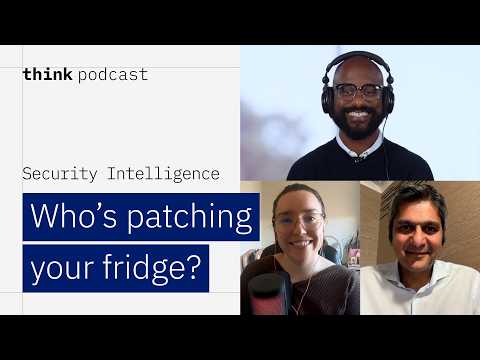
The patching gap: Hacked fridges, AI ransomware and Mythos finds · IBM TechnologyWatch ↗
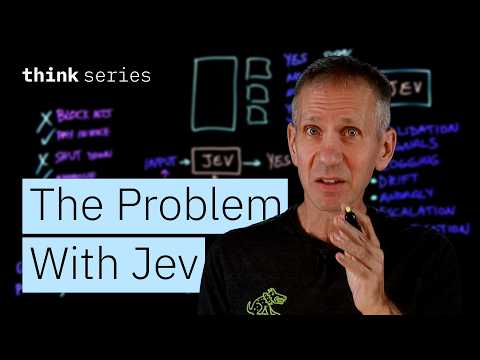
The Problem with Jev: Can You Trust AI Decisions? · IBM TechnologyWatch ↗
More stories this day
AI agents at work
3 tiers
chatbot → DIY agent → personal agent
Merged from 3 videos
AI agents at work
Personal agents are getting polished and plugged into your apps, but they still work alone
A hands-on review of Claude Duet, an explainer on personal agents and a demo of Claude’s live dashboards all point the same way. Agents now connect to your email, calendar and finance tools and keep a memory in plain text files. The gaps are speed, being proactive and working as a team.
Key learnings
There are three tiers: chatbots (no memory), DIY agents that you shape with plain-text rule and memory files, and ready-made personal agents that run all day in the cloud.
Claude Duet inherits your plugins and connectors and looks polished, but parallel tasks took 10+ minutes and it can’t be shared with a team.
Live dashboards pull fresh data through connectors and can be shared by link, so a short prompt can replace a static CSV report.
The trade-off is lock-in: the more an agent knows about you, the harder it is to switch.
Why it matters: Clients will ask “personal agent or DIY setup?” Notion-based memory and rules files are a portable middle path that avoids lock-in.
I tested Claude Duet. Is it worth switching? · How I AIWatch ↗
Personal Agents, Clearly Explained · Jeff SuWatch ↗
Claude’s New Live Dashboards Are Amazing · Skill Leap AIWatch ↗
Open models & cost
155T
tokens a day served by DeepSeek’s now-open engine
Merged from 3 videos
Open models & cost
Why AI keeps getting cheaper: memory is the bottleneck, and the fixes are going open source
DeepSeek open-sourced the engine it uses to serve 155 trillion Token A small chunk of text, roughly part of a word, that AI models read and write. AI usage and pricing are counted in tokens. a day. An IBM explainer shows why that design works: writing an answer is limited by memory speed, not raw compute. And a local-AI build shows a tuned open model on a laptop can handle most everyday tasks.
Key learnings
Reading a prompt is compute-heavy, but writing the answer waits on memory. DeepSeek runs the two on separate machines.
DeepSeek keeps prompt caches on SSD for days, and 96% of input tokens hit the cache. Keep your prompt prefix stable to benefit.
Since 2006, chip compute has grown about 6,500x while memory bandwidth grew far more slowly. Batching many requests together is the main workaround.
Local models are “good enough” for about 95% of tasks (a creator’s claim). A 180B open model ran at about 72 tokens/s on a laptop.
Why it matters: For privacy-sensitive clients, a hybrid setup (local model for routine work, cloud for hard tasks) is now realistic. Stable prompt templates also cut API costs.
DeepSeek Just Open-Sourced How It Serves 155T Tokens a Day · Prompt EngineeringWatch ↗
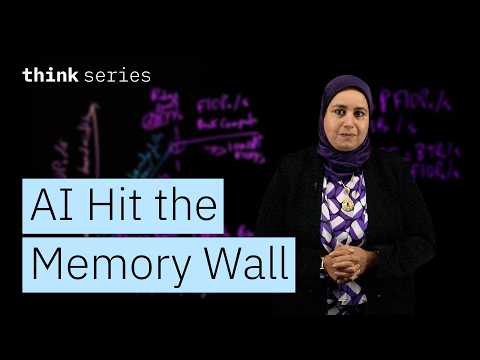
The AI Memory Wall: Why LLMs & AI Accelerators Hit a Bottleneck · IBM TechnologyWatch ↗
Stop paying for AI, run everything locally (here’s how) · David OndrejWatch ↗
The model race
900
questions in the new AI personality benchmark
Merged from 2 videos
The model race
Benchmarks aren’t the whole story: AI “personality” now decides which model people use
Google’s new Gemini 4 Argon tops several leaderboards but still trails rivals at coding. A new personality benchmark finds it scores highest for “slop” (filler and generic phrasing). As top models get equally smart, tone and style are becoming the real difference.
Key learnings
Gemini 4 Argon is #1 on several leaderboards but loses coding benchmarks to Opus 5.5 and GPT-6 Astra.
The AA Personality Bench uses 900 questions across 30 traits. Muse leads on warmth, Opus 5.5 on imagination, and Argon on slop.
In a hands-on test, code-generated motion graphics beat native AI video and were easier to edit.
Policy note: a US federal memo bans DeepSeek models from civilian government systems.
Why it matters: Choose models per task, not by leaderboard. For client-facing assistants, test tone and filler, not just accuracy.
Does Personality Matter More Than Intelligence in AI? · The AI Daily BriefWatch ↗
Did Google just dethrone OpenAI and Anthropic? · FireshipWatch ↗
AI in Asia
−90%
false alerts on Changi’s runways after the AI upgrade
Merged from 2 videos
AI in Asia
From Changi’s runways to China’s robot schools, Asia is putting AI to work in the physical world
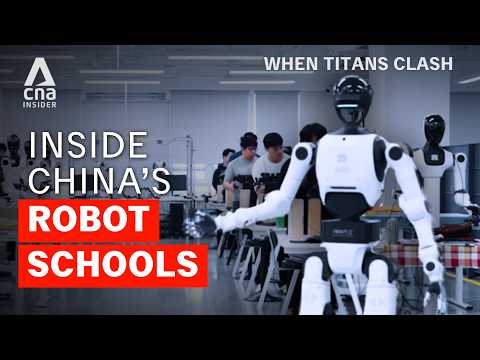
Two reports show AI leaving the screen. Singapore’s Changi Airport uses AI cameras to spot runway debris as small as 4 cm. In China, “robot schools” train Humanoid robot A robot built roughly in the shape of a person, with arms, a torso and often legs. on everyday tasks, at a scale no other country matches.
Key learnings
At Changi, cameras on 12 towers watch each 4 km runway. The AI upgrade cut false alerts by 90% and improved detection sevenfold.
A person still checks every alert before a team goes out, usually within 1 to 5 minutes.
China made about 90% of humanoid robots shipped in 2025 (analyst figures). Training centres teach robots to cook and run machinery.
Risks: a slowing economy and tighter controls may hold back research.
Why it matters: These are strong, local examples for workshops: AI flags, a human verifies, a team acts. It’s the same pattern we design in Notion workflows.
 AI security & trust